
From Craft Fairs to Tank: The $1.5M Science of Scale
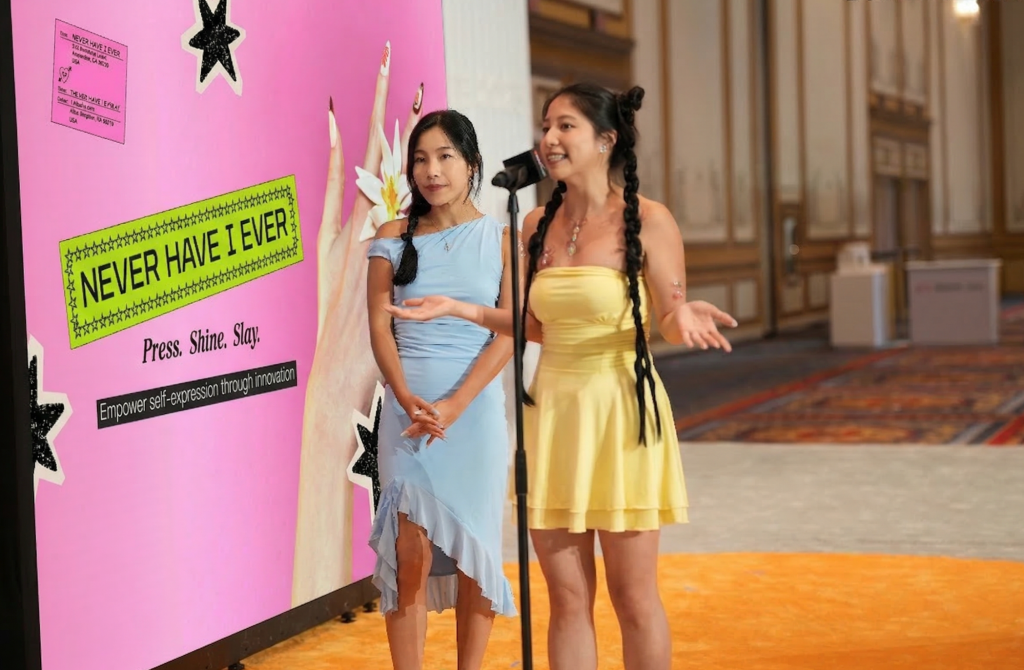
From NYC souvenir shops to a $150,000 Shark Tank deal, Susana Chen and Jess Wu are proving that independent art is the most scalable asset in the beauty industry.
Business ideas don’t always start with a formal 50-page plan. Sometimes, they start with a childhood spent in a family souvenir shop in New York’s Chinatown. For Susana Chen, a graduate of the Parsons School of Design, the “Science of Commerce” was learned by selling “I Love New York” tees at her mother’s shop.
Decades later, Chen teamed up with brand marketing expert Jess Wu to solve a massive pain point in the beauty industry: the gap between high-end artist vision and affordable, wearable products. The result was Never Have I Ever, a startup that bridges the gap between the gallery and the vanity mirror.
The Strategy: Arbitrage through Creative Licensing
The core of the business logic is a sophisticated take on licensing. While traditional beauty brands create generic designs, Chen and Wu built an internal system that allows over 100 independent artists to license their artwork for a 5% royalty.
By turning press-on nails, temporary tattoos, and tooth gems into “wearable art,” they solved a common frustration. “I want an artist’s work on my nails, but the artists don’t get credit, and the tech can’t draw exactly what I want,” Chen explains. By moving the art from a canvas to a high-quality product, they created a high-margin, “instant glam” category.
The Operations: From Craft Fairs to Global Retail
The “Science of the Flip” for Never Have I Ever began on the ground.
- The Pilot Phase: They tested their products at local craft fairs, easily generating $3,000 to $5,000 per weekend.
- Inventory Management: Leveraging Wu’s marketing background, they scaled the supply chain from China to over 2,000 retail locations.
- Multi-Channel Reach: Today, the brand is carried by giants like Urban Outfitters, Nordstrom, and Revolve, but it also stays true to its roots by being stocked in cultural institutions like The Met Museum and MoMA.
The Sustainability Factor: The 3.5X Growth Curve
In just two years, the brand didn’t just grow; it exploded. By the end of 2025, they hit $1.5 million in revenue with 120,000 units sold. This rapid scale was validated on Shark Tank, where Chen’s vulnerable story about her mother’s shop secured a $150,000 deal with Kevin O’Leary.
The business model allows artists to monetize their work at a global scale without the overhead of manufacturing, while consumers get designer aesthetics at an affordable price point.
The Takeaway for Student Founders
Susana and Jess are proof that you don’t need a massive team or a huge budget to launch. You need to understand your “why.” By centering their business around the success of creatives, they didn’t just build a brand; they built an ecosystem.
As they scale into the go-to name for “instant glam,” Never Have I Ever stands as a masterclass in turning a childhood perspective into a million-dollar business model.
About The Author