

Ishrak Khan: Building and Funding Grammarly for Code
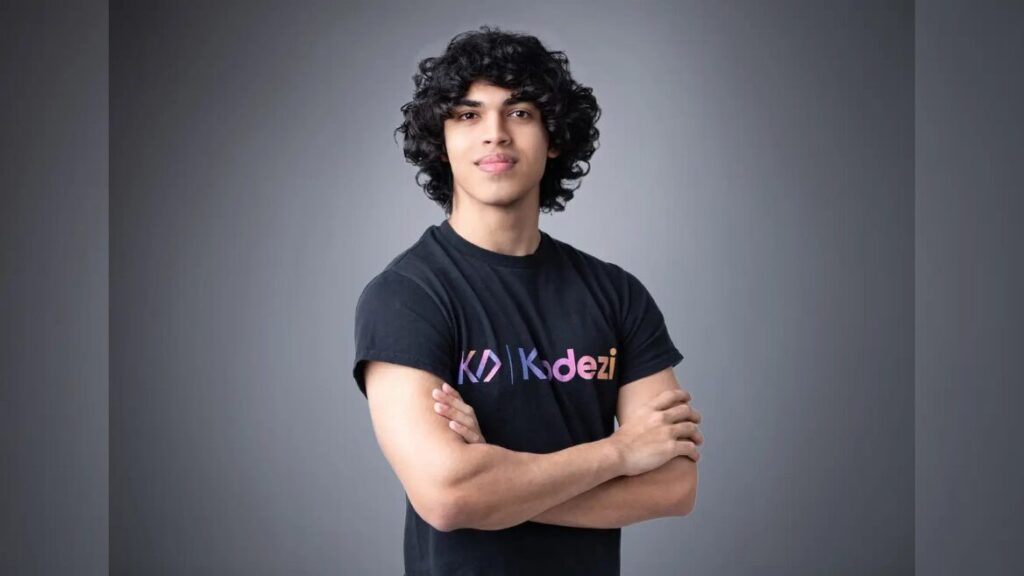
At a time when most teenagers are preparing for college applications, Ishrak Khan was preparing investor pitch emails.
Now 22, the Bangladeshi-American founder has raised approximately $2.8 million for his AI startup, Kodezi, a platform designed to automatically detect and correct programming errors, much like Grammarly does for writing. What began as a high school idea has evolved into a company employing more than 35 people.
Spotting a Classroom Problem
Khan’s journey started long before funding rounds and investor conversations. After moving to the United States in 2011, he began teaching himself how to code using YouTube tutorials on a laptop his parents bought for him.
While in high school computer science classes, he noticed a recurring issue: students constantly fixing coding errors manually. That observation sparked a simple but powerful idea. What if there was an AI tool that could automatically correct code in real time?
He spent nearly a year experimenting with machine learning systems to develop a working prototype. By the time he had something functional, the idea had grown beyond a school project. It had become a company in the making.
Raising Money Before 18
Unlike many founders who wait until after university, Khan began pitching while still a teenager.
He cold-emailed CEOs, venture capitalists and AI researchers. He applied to startup events. When he couldn’t afford a $500 booth at one conference, he asked for a waiver and got it. That exposure helped him secure his first angel investment of $20,000 before turning 18.
The early stages were not easy. At the time, generative AI was not mainstream. Convincing investors to back an AI coding platform built by a teenager required persistence. Skepticism centered not just on the technology, but on whether someone so young could execute such an idea.
However, timing eventually worked in his favour. As AI tools gained global attention, the relevance of his product became clearer. By 19, he had raised $800,000. By 22, that number had grown to over $2 million.
Choosing Startup Over College
One of Khan’s most controversial decisions came at 17: whether to attend college or pursue his company full-time. Despite being accepted into more than a dozen universities, including Ivy League institutions, he chose to focus entirely on building Kodezi. He believed the opportunity window for AI innovation was immediate. Waiting four years could mean entering a more crowded market with fewer advantages.
Khan’s fundraising success did not happen by accident. Over time, he learned to consistently answer three core investor questions: What problem are you solving? Why does it matter? Why can this become a large, scalable company? He also reframed rejection into mutual evaluations between him and the investors.
Scaling Toward a Bigger Vision
Today, Kodezi positions itself as an automated “mechanic” for software. It is a system that ensures codebases remain functional and efficient over time.
Khan’s long-term vision is to make the platform the default solution infrastructure companies rely on to maintain their software.
At just 22, he is already operating at a scale many founders do not reach until much later.
What Student Entrepreneurs Can Learn
Khan’s story reinforces a few important realities about modern entrepreneurship.
First, opportunity does not always wait for graduation. In fast-moving industries like AI, early action can create competitive advantage.
Second, access to resources has shifted. Khan began with YouTube tutorials and cold emails. These tools are available to nearly any student with internet access.
Third, persistence matters. His early fundraising attempts did not immediately result in capital, but they generated exposure and relationships that later translated into investment.
Finally, timing is powerful. Building in emerging industries often requires patience before mainstream validation arrives.
For students watching the rapid growth of AI and other tech sectors, the lesson is not necessarily to skip college but to recognize that innovation windows can open earlier than expected. Sometimes, the most significant opportunities emerge while others are still preparing for them.
About The Author