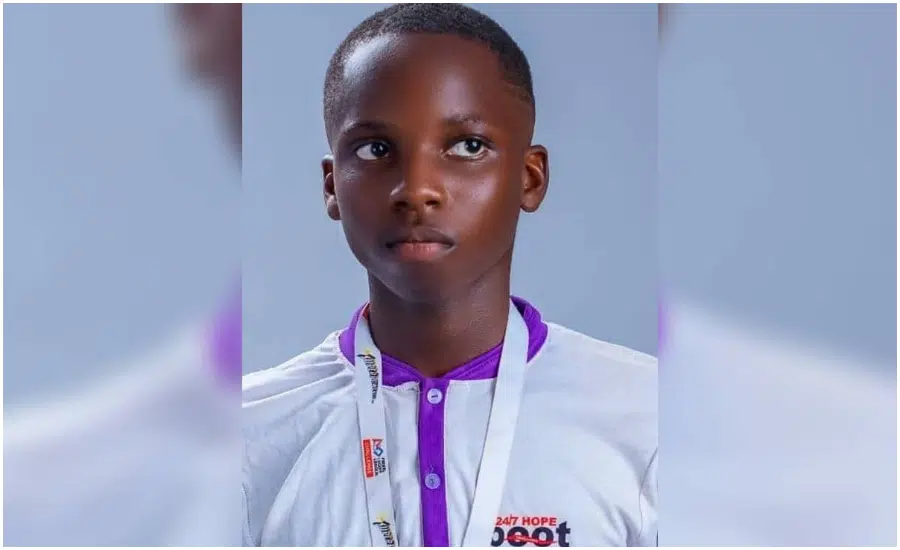
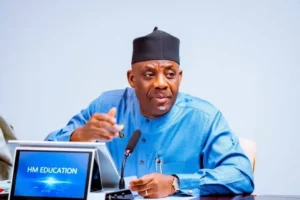
Many people smile in disbelief when they hear that Okechukwu Nwaozor wants to build a rival to ChatGPT. Understandably so, as he is a first-time founder, only seventeen, fresh out of secondary school, and a completely self-taught developer. But his determination remains unshaken, and his confidence pushes him far beyond what most expect from someone his age.
He raised ₦2.7 million to support his work, which seems extremely small beside OpenAI’s billions. Still, he continued building consistently. He did not stop at an idea or a concept. Instead, he created a working model that anyone can test publicly, which surprises people even more.
How OkeyAI became a real model, not just a wrapper.
When users test the OkeyMeta chatbot, OkeyAI, they often notice its confidence and clarity. It introduces itself as OkeyAI 4.0 DeepCognition, a product developed entirely by the OkeyMeta team in Nigeria. The model also points out major contributors like Precious Obiesie, Raji Abdulazeem Adeyemi, Shuaib Ali Abiodun, and Woleola Abdullateef.
Training an AI model from scratch requires serious technical work, as leading labs such as OpenAI and Google use giant datasets and extremely costly GPU clusters. However, that dramatically changed with open-source research. Developers are able to rent compute on platforms like Google Cloud. And that is just how Nwaozor trains his models.
He then collected some African-focused datasets, cleaned them painstakingly, made several iterations of the models, created his own training pipelines, and designed an interface API that was now used by developers in real projects.
Curiosity led to the creation of OkeyMeta.
His motivation did not come from the global rise of ChatGPT. Instead, his curiosity began with one simple question about how Google produced its accurate results instantly. That curiosity led him into Facebook developer groups, where he discovered AI bots responding like real humans. Those early experiences pulled him deeper into artificial intelligence long before he could have imagined building his own model.
By 2022, he had trained the early versions of OkeyMeta. Like many self-taught developers, he tried different ideas, including social platforms. Yet OkeyMeta became the project he could not let go of. Later, he registered the company, combining his name with his admiration for Meta.
Growing OkeyMeta and Navigating Real Challenges
Today, OkeyAI has nearly 1,000 users, while the OkeyMeta API platform has more than 8,000 developers. A large portion of them build actively with it, despite the team’s very limited budget. Growth increases computing costs, and their resources remain extremely tight. Yet, he remains convinced. Okechukwu Nwaozor sees OkeyMeta turning into a global AI company built on African ingenuity and grit. To get to that future, he now needs the right investors, mentors, and infrastructure to scale successfully.