
From Classroom Project to Startup: A $16,000 Biotech Innovation Breakthrough
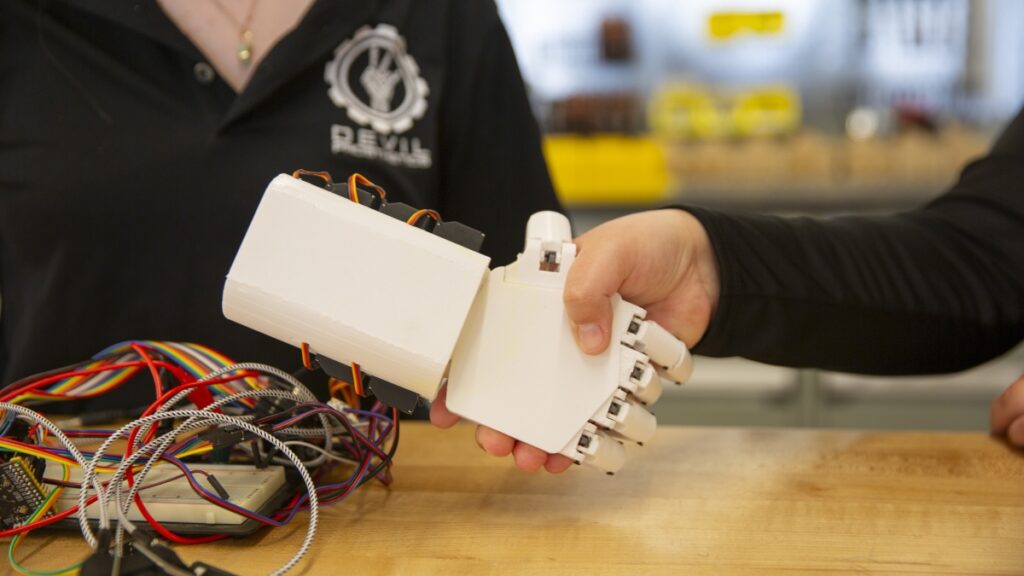
Many of the world’s most overlooked problems affected the smallest people: Children. However, a group of student engineers at Arizona State University decided that the situation was a problem to be solved and not simply accepted. Initially, what started as a university engineering project has now evolved into a Biotech innovation startup developing affordable 3D printed upper limb prosthetics specifically designed for children.
Solving a Problem Others Overlooked
One of the biggest challenges in pediatric prosthetics is cost. Advanced prosthetic devices can range from $16,000 to $50,000. This price range is even more burdensome because of how quickly children outgrow them. Insurance often does not cover repeated replacements, and this leaves families with impossible choices. Many devices available to children also offer limited functionality, such as basic movements
Rather than adapting adult models for smaller users, the student team focused on children’s needs, such as durability, comfort, adaptability, and personalization. Using 3D printing technology, they were able to drastically reduce the cost to $2,000 or even less. Their prosthetic also uses myoelectric sensors and machine learning systems to interpret muscle signals, allowing the device to adapt to each child’s movement patterns.
This design focuses on putting the user first, and that angle transformed the project from an academic assignment into a real-world solution.
From Student Assignment to Structured Biotech Innovation
What makes their story especially relevant to student entrepreneurs is not just the innovation, but the evolution.
At first, the project started as a university community service engineering program. It could have ended when the semester did, but instead, the team members chose to narrow their focus, restructure their approach and operate more like a startup.
They divided responsibilities into mechanical, administrative, and software units, built a pitch desk, refined their value proposition, entered funding competitions, and filed an LLC. Within weeks of preparation, they secured $14,000 to support the biotech innovation from one funding initiative and $2,000 from a pitch competition.
The Bigger Lesson For Student Entrepreneurs
More importantly, stories like this resonate beyond engineering labs. They are proof that big ideas can start in classrooms. Not every startup begins in a tech incubator or corporate boardroom. Some begin as assignments. What matters is whether you see potential beyond the grade.
The team did not chase a trendy idea. They focused on an issue that needed attention: children needing functional, affordable prosthetics. Solving specific problems often creates a stronger impact than chasing broad popularity.
The team’s success in securing funding shows that clarity attracts opportunities. Judges reportedly highlighted the team’s preparation and credibility. This is a key principle that should be learned. If you can explain your value clearly, your chances increase dramatically.
Finally, by organizing themselves like a professional startup, the team gained not just funding but belief. They learned to pitch, delegate and articulate impact. These are skills that extend far beyond engineering.
For student entrepreneurs in Nigeria and beyond, the message is simple: innovation does not require waiting until graduation. It requires commitment, focus and the willingness to evolve your idea beyond the classroom.
About The Author