
Haast Autonomous: How Students Are Reinventing Medical Deliveries
What if a drone could deliver blood samples faster than a car ever could? That is the question that became a startup for seven engineering students at Rice University in Texas. What began as a classroom project has grown into Haast Autonomous, a drone logistics company that just raised $1.85 million in pre-seed funding.
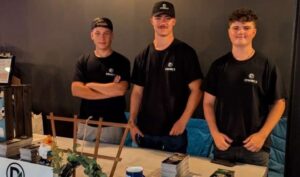
The venture started as a response to Rice University’s Liu Idea Lab for Innovation and Entrepreneurship Summer Venture Studio, where the founding seniors Ege Halac, Jason Chen, and Santiago Brent initially developed the concept. They later built prototypes in collaboration with fellow engineering students Felix Hasson, Ethan Javedan, Kenna Sanders, and Caden Schmidt at the university’s Oshman Engineering Design Kitchen. That was how they turned a capstone design project into a logistics startup.
The Identified Problem
The problem they are solving is simple but urgent. Important medical supplies such as blood samples, antivenom, and emergency treatments still travel between facilities by road as hospitals become more centralized. That takes time, and time matters in healthcare
Haast Autonomous is building drones specifically designed to handle that gap. Their aircraft takes off and lands vertically, making it easy to operate directly from hospital rooftops. Once in the air, it switches to horizontal flight to cover distances of up to 62 miles efficiently. It also has a cargo compartment that is specially built to control temperature, pressure, and vibration. This keeps sensitive medical cargo safe throughout the journey.
How Haast Autonomous was Developed
The team did not move slowly. They built 13 different aircraft versions in just 16 weeks, keeping costs under $1,000 per prototype using 3D printing. That speed earned them multiple awards, including Best Aerospace or Transportation Technology at Rice’s 2026 Engineering Design Showcase.
Beyond the aircraft, they are also developing software that lets hospitals request flights, track deliveries in real time, and manage airspace. This makes the whole system practical, and not just impressive.
The Future for The Founders
With funding secured, all seven founders are committing to the venture full time after graduation. Pilot trials are expected in early 2027, with commercial deployment targeted for later that year.
Their story is a straightforward reminder that the best businesses often start by solving a real problem, and that a university project, taken seriously enough, can become something that saves lives.
About The Author